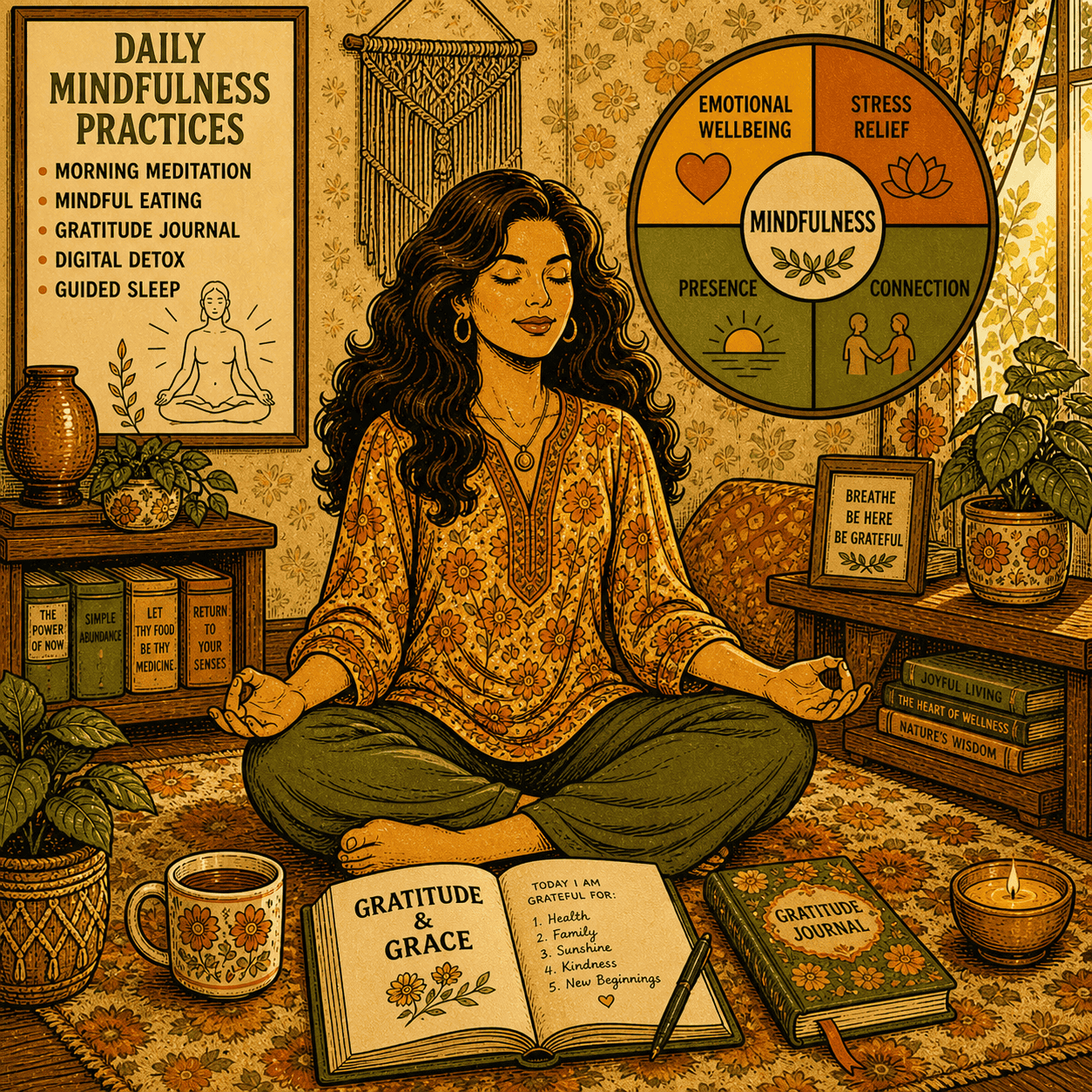
Mindfulness is the practice of paying deliberate, non-judgemental attention to the present moment — your breath, body sensations, thoughts, and surroundings. Research shows it can reduce stress, improve sleep quality, and support emotional regulation when practised consistently. In fast-paced Indian cities where long commutes, family responsibilities, and digital overload are common, even brief daily mindfulness can help restore balance. It complements — but does not replace — professional mental health care when anxiety, depression, or burnout are severe.
What Mindfulness Can and Cannot Do
- Evidence-based benefits — reduced perceived stress, improved focus, better sleep hygiene, lower blood pressure in some studies, and greater emotional awareness
- Common forms — breath awareness, body scan meditation, mindful walking, mindful eating, and guided apps or audio sessions
- Indian traditions — pranayama (controlled breathing), yoga, and vipassana meditation share roots with modern mindfulness; many find familiar cultural entry points helpful
- Realistic expectations — mindfulness is a skill that develops over weeks, not a quick fix; wandering thoughts during practice are normal, not failure
- Limitations — not a substitute for therapy, medication, or crisis intervention for clinical depression, trauma, or suicidal thoughts
Practical Mindfulness Steps for Daily Life
What to Avoid
- Expecting a completely empty mind — the goal is awareness, not silence
- Using mindfulness to suppress or avoid difficult emotions rather than acknowledge them
- Practising intensive meditation alone without guidance if you have unresolved trauma
- Replacing prescribed psychiatric treatment with meditation apps
- Judging yourself harshly for missed days — consistency matters more than perfection
When to See a Mental Health Professional
- Stress or anxiety that interferes with sleep, appetite, or daily functioning for more than two weeks
- Recurrent panic symptoms — racing heart, chest tightness, fear of dying
- Depressive symptoms including loss of interest, hopelessness, or social withdrawal
- Meditation or mindfulness practice triggers distressing memories or dissociation
- Difficulty maintaining relationships or work performance despite self-care efforts
- Desire for structured therapy such as mindfulness-based cognitive therapy (MBCT) or CBT
Frequently Asked Questions
How long before mindfulness shows results?
Many people notice small shifts — slightly better sleep or less reactivity — within two to four weeks of daily five-to-ten-minute practice. Measurable changes in stress biomarkers and brain activity typically require eight weeks or more of regular practice. Treat it like physical exercise: benefits accumulate gradually.
Is mindfulness the same as meditation?
Mindfulness is a quality of attention that can be cultivated through meditation and also through everyday activities. Not all meditation is mindfulness-based — some traditions focus on mantras or visualisation. For stress reduction, breath-focused and body-awareness practices are the most studied.
Can I practise mindfulness during a busy Indian workday?
Yes. Brief practices work well — a two-minute breathing pause between meetings, mindful eating during lunch instead of eating at your desk, or conscious breathing during a metro commute. The key is anchoring attention to the present rather than requiring a silent retreat environment.
Are mindfulness apps reliable?
Apps such as Headspace, Calm, and Indian platforms like ThinkRight.me can provide structured guidance for beginners. Choose apps with evidence-based content and free or affordable options. Apps supplement but do not replace professional counselling when mental health symptoms are significant.